What this guide helps you decide
A practical overview of Vietnamese and international scaffolding standards for project teams working with temporary access and scaffold systems.
Article contents⌄
Scaffolding projects in Vietnam may be governed by Vietnamese safety requirements, project specifications and, in some cases, international standards referenced by the client or main contractor. The important point is not to collect as many standard numbers as possible, but to understand which document applies to the scaffold type, component, design and work activity.
01Start with the project specification
The contract, approved method statement, temporary-works design basis and client safety requirements should identify the documents that govern the work. A generic website article cannot replace those project documents or the full text of a standard.
02Vietnamese requirements
For projects in Vietnam, national regulations and applicable Vietnamese standards must be considered. One important current reference is TCVN 13662:2023 — Scaffolding — Safety requirements, which covers safety requirements for erection, use, maintenance and dismantling of construction scaffolds.
03International references commonly encountered
- EN 12811-1: performance requirements and general design for access and working scaffolds.
- EN 74 series: requirements and test procedures for couplers, special couplers, base plates and spigot pins used in scaffolds and falsework.
- BS 1139 series: a family of British documents for metal scaffolding components and related equipment; exact part and edition matter.
- EN 39: historically covered loose steel tubes for tube-and-coupler scaffolds. BSI lists BS EN 39:2001 as withdrawn from 21 May 2026, so it should not be presented as a current specification without checking the project requirement.
04Do not use “BS1139” as a complete specification
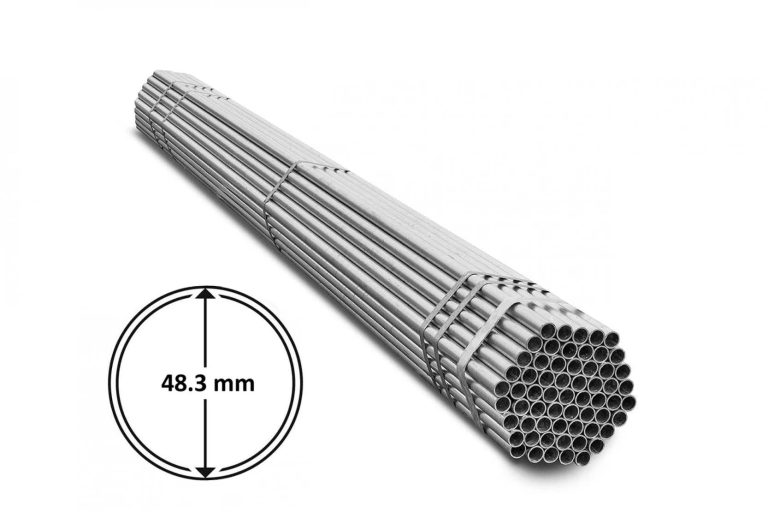
In the Vietnamese market, “BS1139 scaffolding” is often used as a commercial description for 48.3 mm tube-and-coupler systems. That description is useful for communication, but a professional project should identify the exact tube, coupler, base, platform or tower requirement and the applicable standard or approved specification for each component.
05What should be checked before mobilization
- scaffold purpose and load requirements;
- system type and component compatibility;
- material and dimensional requirements;
- foundation, ties, bracing, access and edge protection;
- inspection and handover requirements;
- weather and wind exposure where relevant;
- project-specific certificates, test records or traceability requirements.
06A practical standards workflow
- Identify the scaffold type and intended use.
- Read the project specification and temporary-works requirements.
- Confirm the current status and edition of referenced standards.
- Check that supplied components match the specified system.
- Prepare erection, inspection and handover controls before use.
For representative systems, visit Scaffolding Systems & Accessories. For project-specific questions, use Contact & Technical Support.
Need help applying this to a real project?
Send your working height, load requirement, drawing, BOQ or site photos. Our team can help narrow the appropriate scaffolding or equipment approach.

Thien Phu Technical Editorial Team
Prepared from Thien Phu's field, product and project-support experience in Vietnam, then reviewed for terminology, standards context and practical use by the Thien Phu Technical Desk. Read our technical editorial policy →