What this guide helps you decide
Key planning, stability, wind, tie, access and inspection considerations for high-rise scaffolding and façade access work.
Article contents⌄
High-rise scaffolding requires more than repeating a low-rise scaffold over additional levels. As height increases, wind exposure, cumulative geometry errors, tie forces, access, falling-object risk and emergency planning become more significant. A high-rise scaffold should therefore be treated as a project-specific temporary structure.
01Define the purpose before choosing the system
Façade construction, painting, repair, cladding, MEP work and material access can require different platform layouts and load assumptions. The scaffold system should be selected around the work activity rather than chosen only by familiarity.
02Systems commonly considered
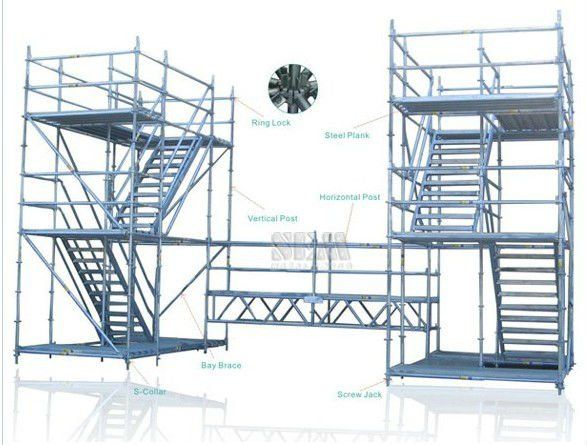
- Ringlock: suitable for modular layouts and complex geometry.
- Frame scaffolding: efficient for repetitive façade work where geometry is straightforward.
- Tube and coupler: useful where irregular structures and custom connections require greater flexibility.
- Wedge systems: more commonly associated with shoring and formwork-support applications.
03Foundation and transfer conditions
The scaffold load path must be clear from the highest working level to the supporting structure or ground. Transfer beams, podium roofs, setbacks, cantilevers and suspended zones can create special conditions that need specific review.
04Ties and stability
At greater height, the tie arrangement becomes critical. Tie spacing, anchor capacity, bracing and the interaction with the building should follow the approved scaffold design or project method. Ties should not be removed informally to allow other trades to work.
05Wind and enclosure effects
Mesh, sheeting and temporary enclosure can substantially change wind actions on a scaffold. A configuration that is acceptable without sheeting may require a different tie or design approach once the façade is enclosed.
06Platforms and access
Working levels should be complete and arranged for the intended task. Safe vertical access is required throughout the scaffold. Materials should not be accumulated on platforms without considering the permitted load and distribution.
07Inspection and modification control
High-rise scaffolds should be inspected before use and after modifications or events that may affect condition or stability. A controlled handover and tagging system helps users identify which sections are released for work.
08Project-specific engineering
Unusual height, loading, geometry, cantilevers, transfer conditions or wind exposure may require design verification by competent temporary-works professionals. Generic website guidance is not a substitute for that review.
For project support, see Scaffolding Erection Services and Project Capability.
Need help applying this to a real project?
Send your working height, load requirement, drawing, BOQ or site photos. Our team can help narrow the appropriate scaffolding or equipment approach.

Thien Phu Technical Editorial Team
Prepared from Thien Phu's field, product and project-support experience in Vietnam, then reviewed for terminology, standards context and practical use by the Thien Phu Technical Desk. Read our technical editorial policy →